English Language in Kamukoti
How much English do Kamukoti children actually learn?
In Kamukoti’s full-day pedagogy, 25% of the day is in English, which means every Kamukoti child becomes familiar with English on a daily basis.
But how do we include English in everyday life with children?
And how do the children themselves experience learning English?
Songs
As we know, music and singing are excellent ways to support language learning, so we don’t miss that opportunity when learning English!
With melodies, language learning becomes more fun, creative, artistic—and almost unavoidable.
Below you can listen to some of the children’s favourite songs, where they learn numbers, animals and clothing words:
This is the way we put on our clothes – https://youtu.be/1GDFa-nEzlg?si=HkihTVf_LUA0IAqU
Greetings
“Good morning for all the children and adults” is the greeting we often start our morning circle with.
Through repeated routines, greetings become familiar and children can even use them outside daycare.
In the older groups we also often speak English during mealtimes.
“Thank you”, “You’re welcome” and “Please” are expressions that at least the older Kamukoti children already know how to use.
Stories
In story books, the pictures strongly support spoken language. Even if every word isn’t understood, with pictures and an expressive reading style, it’s easy to follow the story.
At the same time, we can go through new vocabulary and translate sentences together.

Stories
In story books, the pictures strongly support spoken language. Even if every word isn’t understood, with pictures and an expressive reading style, it’s easy to follow the story.
Short and repeated instructions
Children (and many adults!) enjoy routines and even crave them. Through repeated situations, language learning becomes a natural part of everyday life.
“Please form a line”,
“Let’s go”,
and “Wash your hands please”
are examples heard every day and therefore gradually become part of the children’s vocabulary.
Games and play
In Finland, play-based learning is the main approach in early childhood education. Language learning is just one of the areas that develops through play.
Familiar games also work perfectly in English—for example “Captain says”, the English version of “Kapteeni käskee”.
Another great game is Kim’s game. A group of items is placed in front of the children, they are named, and then with eyes closed one item is hidden—others guess which one is missing.
With this you can practise colours, animals, food or school items in English.

Games and play
In Finland, play-based learning is the main approach in early childhood education. Language learning is just one of the areas that develops through play.
Learning environment
You can also support language learning through the physical environment.
Pictures used in learning, rhyme bags and song bags can be displayed in the group. When learning new songs, support pictures help children remember meanings and support learning new words.

Children’s thoughts about learning English
(these can be placed in a separate highlighted box)
Child 6 yrs:
“It feels good to learn English. I’ve already learned different words like ‘lucky lucky me’ from the song. And I think I’m starting to understand English a little too.”
Child 6 yrs:
“I’ve learned quite a lot of English. It feels nice because then I can talk to different people who don’t speak Finnish.”
Child 5 yrs:
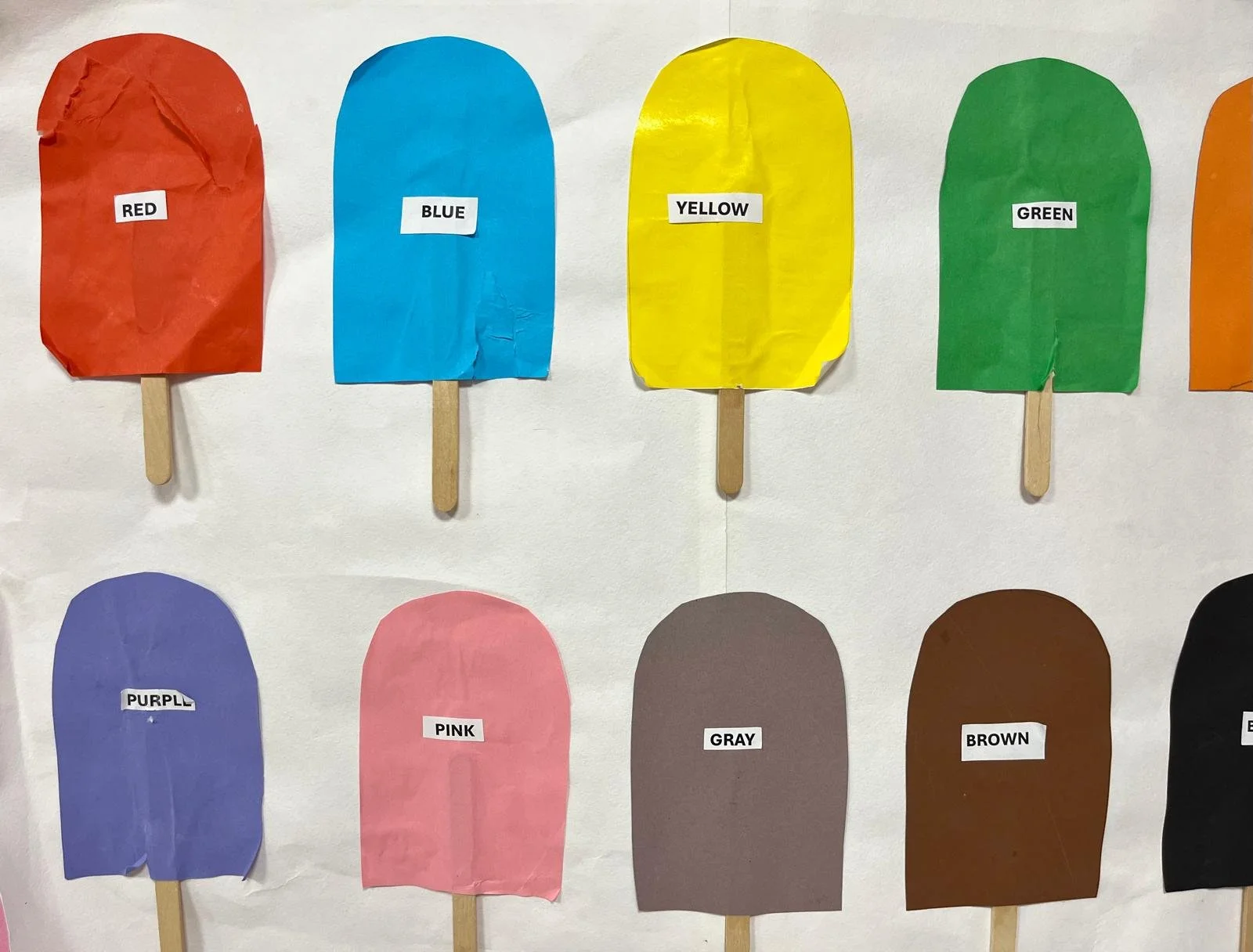
“Red and blue and yellow and green and pink. It’s fun to learn.”
If your daycare or family isn’t bilingual, you can still learn a new language just for fun by trying out some of these Kamukoti ideas.
Enjoy! 😊
Original Finnish text translated by ChatGPT.